![[background image] image of an academic setting (for a university)](https://cdn.prod.website-files.com/68b1ee14d7b77ca088693ae1/6aa16691dcb89f9d6fea35e0_Gemini_Generated_Image_c8t85hc8t85hc8t8.jpg)
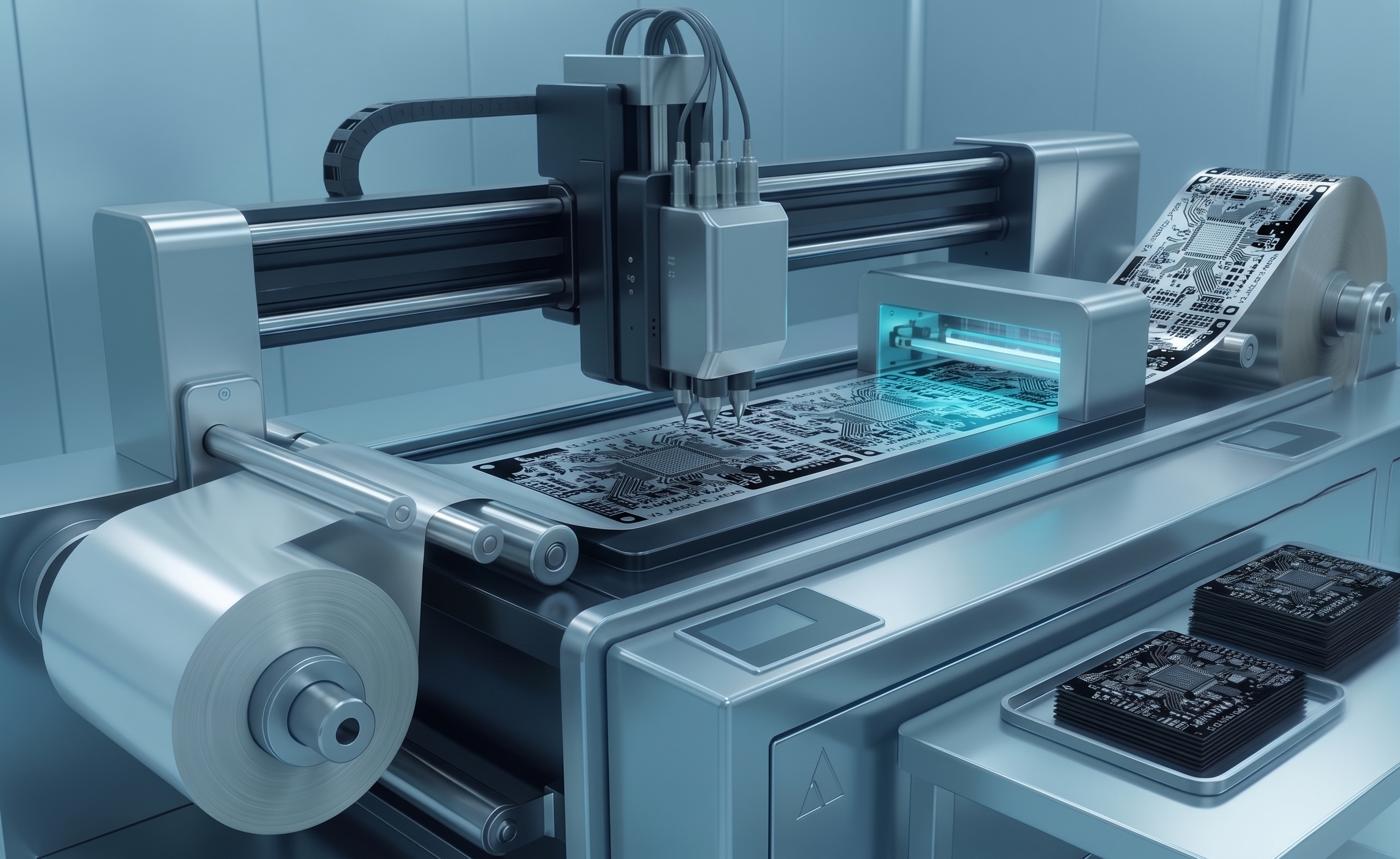
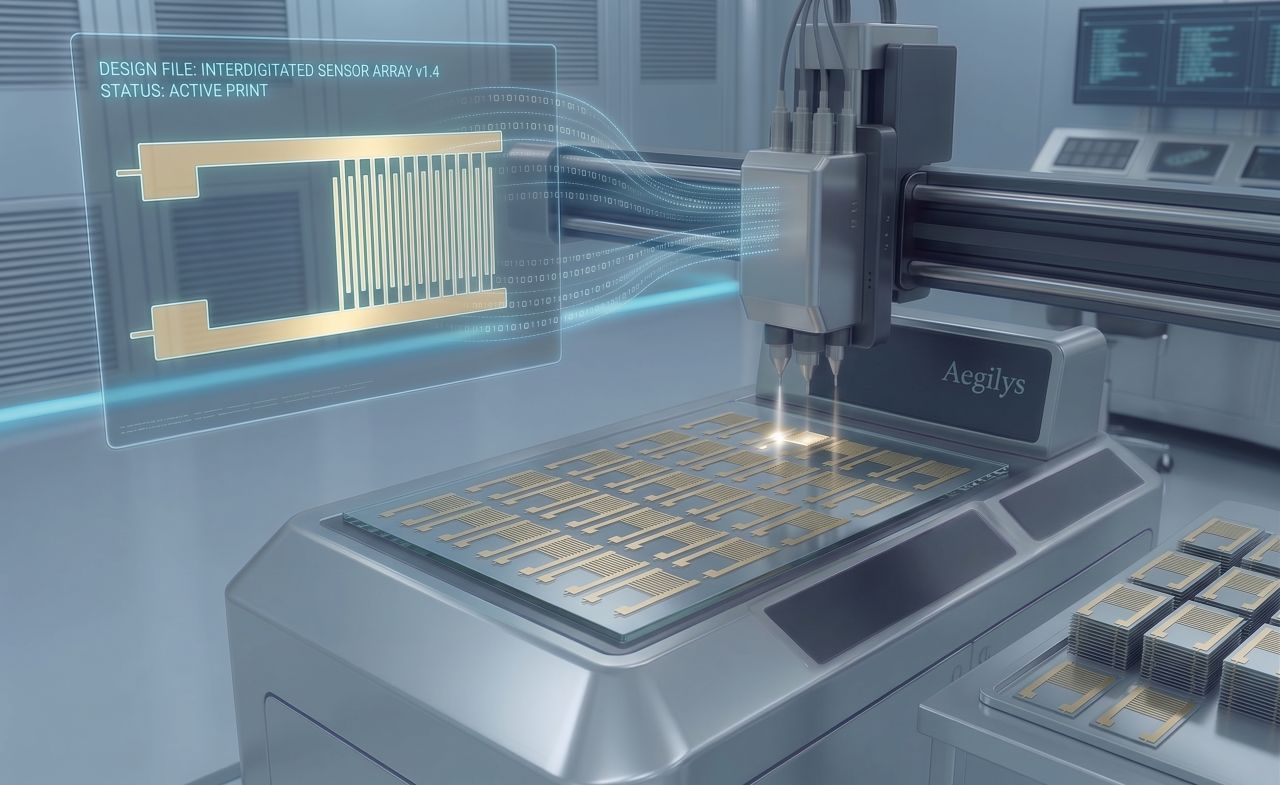
Convert CAD, SVG, or vector layout files directly into functional components in minutes without $50k+ tooling costs or 12-week lead times
Picoliter inkjet deposition places expensive precious metals (silver, gold, cobalt) and 2D nanomaterials (MXenes) only where functional pathways are required
Digitally controlled droplet ejection combined with automated inline post-processing for exceptional lot-to-lot calibration and minimal signal drift
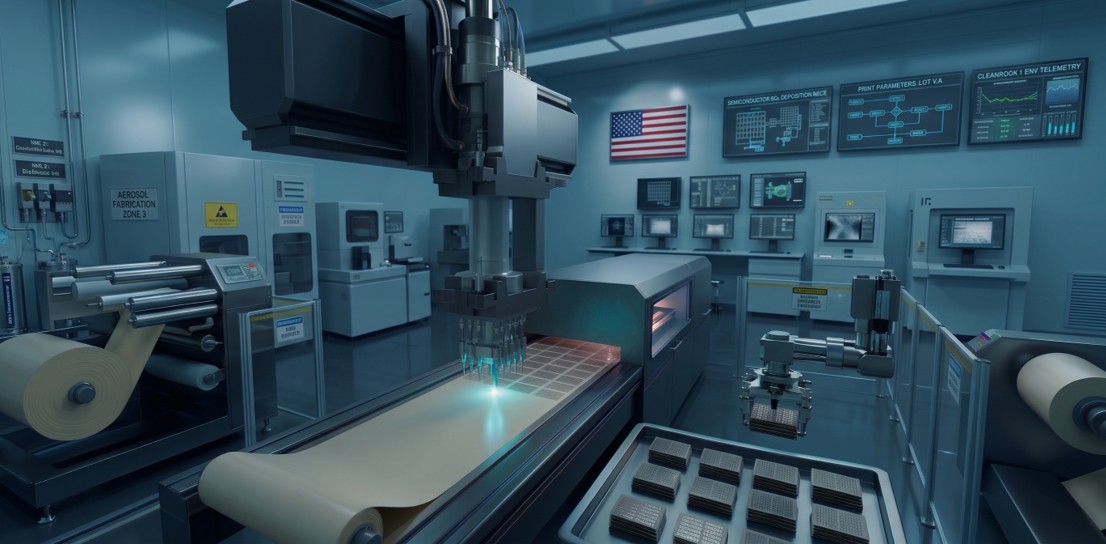
Digitally reconfigurable, US-based production eliminating reliance on fragile overseas suppliers
![[headshot]](https://cdn.prod.website-files.com/68b1ee14d7b77ca088693ae1/6aa1a73c36c1ef2c1d74a707_Picture7.jpg)

Meet the experts behind Aegilys—pioneering advanced manufacturing for novel electrochemical products and applications. Our multidisciplinary team combines deep scientific and engineering expertise with a commitment to operational excellence and driving innovation
![[headshot]](https://cdn.prod.website-files.com/68b1ee14d7b77ca088693ae1/68e80f5796dffd2b708811b2_STilley_headshot.jpg)










Because you cannot build a house on sand.
The chemical sensing industry is littered with failed startups and overhyped promises because teams attempt to build complex assays on fundamentally broken, erratic physical foundations.
When direct molecular monitoring proves too difficult on off-the-shelf hardware, consumer startups often pivot to indirect gimmicks - like claiming to measure real-time hormone fluctuations using basic skin temperature and heart rate variability (HRV). On the other end of the spectrum, biotech ventures promise continuous, multiplex tracking, ignoring real-world data that shows there is too much noise in their system to accurately detect a signal.
The root cause of these failures is two-fold:
1. Crude Substrates: Standard screen-printed electrodes suffer from rough surface morphology and high batch-to-batch impedance variations.
2. Unstable Surface Chemistries: Developers are forced to attach their bio-receptors to these erratic substrates using highly variable self-assembled monolayers (SAMs), resulting in severe signal drift, false positives, and failed calibrations.
Aegilys solves the foundational problem. We do not ask the industry to rely on indirect proxies or unproven surface chemistries. By using picoliter digital jetting, laser-induced graphene (LIG), and stabilized interfacial chemistry layers, we produce rock-solid, digitally reproducible electrode hardware. We deliver the precise, low-noise electrochemical foundation that defense agencies, MedTech pioneers, and researchers need to build sensors that actually perform in the real world.
rapid, field-deployable threat detection is a mandatory defense priority. Today, over 80% of research and specialty electrodes depend on vulnerable foreign supply chains (DropSens/Spain, Zensor/Taiwan, Zimmer & Peacock/Norway). If a bio-threat or CBRN agent emerges, relying on overseas contract manufacturers is an unacceptable security risk. Aegilys provides 100% domestic, file-to-part additive foundry capacity in Rockville, Maryland, allowing defense teams to reconfigure threat detection patterns in software within hours.
Traditional screen printing relies on physical mesh screens that clog, degrade, and create lot-to-lot signal variations while wasting expensive raw materials. Aegilys uses a 100% digital, non-contact process combining picoliter inkjet deposition and laser-induced graphene (LIG). There are no physical screens to buy or replace, resolution is sub-micron, precious metal usage (gold, silver, PGMs) is reduced by up to 90%, and component geometries can be modified in CAD files instantly.
Aegilys is actively expanding beyond single-use analytical electrodes to manufacture complete multi-layer functional architectures, electro-catalytic films, and integrated electrosynthesis cell components. These include:
Our additive platform handles a wide range of conductive, catalytic, and 2D materials, including silver nanoparticles, carbon, gold, platinum group metals (PGMs), MXenes, dielectric polymers, and organic conductors - deposited directly onto flexible polyimide, PET, and other media.
Get in touch
We have an online store coming soon that will include a portal for direct upload of custom CAD geometries for 48-hour prototyping. Please reach out to sloane@aegilys.com if you are interested in executing Joint Development Agreements (JDAs) and Non-Recurring Engineering (NRE) contracts for enterprise defense or clean energy catalytic applications.